Contents
Maruti Suzuki’s 100-City EV Charging Plan: Shaping India’s Electric Mobility Future
Maruti Suzuki’s 100-City EV Charging Plan: Shaping India’s Electric Mobility Future
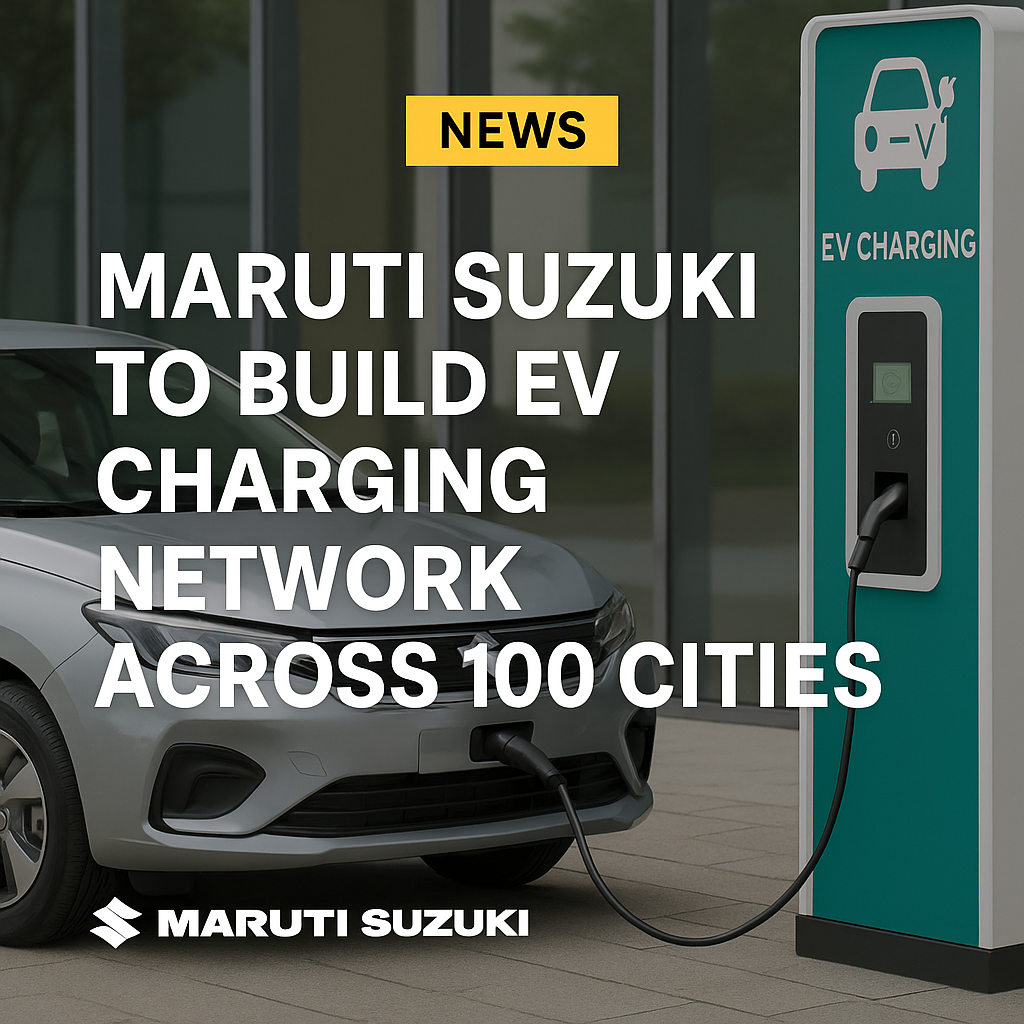
Maruti Suzuki is tackling India’s EV adoption challenges head-on with a nationwide charging network across 100 cities. This initiative aims to reduce range anxiety, improve accessibility, and encourage millions of Indians to choose EVs as their primary mode of transport.
Maruti Suzuki’s 100-City EV Charging Plan: Shaping India’s Electric Mobility Future
The development of EVs in India has progressed consistently and today, the vehicles have become somewhat of a luxury/lifestyle purchase among consumers with EVs serving as the second or third vehicle of a household. The country has the largest carmaker which is trying to alter that perception now with an ambitious plan to launch EV charging infrastructure in 100 Indian cities, by Maruti Suzuki.
This is one of the steps that Maruti has in its overall plan of increasing spread of EVs in a market where infrastructure is the biggest hindrance. Although the past year recorded an increase in the number of EVs being sold, a large number of prospective consumers are not convinced because they say that they still have range anxiety and poor charging infrastructure. The new strategy of Maruti tackles all these problems directly by being convenient, easily reached, and accessible nationwide.
The charging network will consist of a blend of e offers fast chargers and standard chargers with the selection of strategic locations in urban hubs, highway, and high-foot fall in the regions of operation. Through the collaboration with local authorities, energy corporations, and even internal infrastructure providers, Maruti is expected to guarantee that EV users can confidently drive without panicking about where they should refill the reserves.
There is also an element of a statement of intent with Maruti Suzuki, this will also be a reminder that the company is ready to play hard ball in the EV market. Although the brand has been reserved so far in terms of launching its first electric models, it is now apparent that Maruti does not want to be behind the curve in catching up with EVs but looks forward to having major ecosystem in place by the time these models are launched. The value addition is clear to a consumer point of view. The extensive charging system would limit its reliance on charging systems in home locations, which will not always be an option to residents in apartments and those without personal parking spaces. It also supports a further range of intercity travel thus EVs are a viable option to urban and semi-urban customers.
In a larger perspective of the industry, the 100-city roll out by Maruti may be a precedent, other auto companies will be eager to spend on shared infrastructure instead of locking horns over siloed degrees of isolation. This would result in a cleaner, accessible, and efficient charging environment, which will be beneficial to the whole EV market in India.
But there still are challenges. Grid capacity, effective maintenance as well as easy to use payment systems will determine the success of this initiative. Charging stations when poorly managed may soon be rendered inoperative and underutilized rendering consumer confidence in them. Nevertheless, the action of Maruti Suzuki is a significant step in the direction of the normalization of EV ownership in India. Not only does the company enable itself to look into its future electric product launches but also makes a great contribution to the sustainable mobility plans of the country by addressing one of the greatest pain points on the EV adoption curve. This 100-city charging system could be setting Maruti on a path towards making the next big automotive revolution in India one where EVs are not an option, but are the preferred choice to over 100 million Indian drivers.