Contents
Trump Announces 25% Auto Tariffs: A Bold Shift in Trade Policy
Trump Imposes 25% Auto Tariffs: Impact on U.S. Industry & Global Trade
U.S. President Donald Trump has announced a 25% tariff on imported cars and key auto parts, effective April 3. The policy aims to boost the U.S. automotive manufacturing industry by encouraging domestic investment. While supporters argue it will create American jobs and strengthen local production, critics warn of rising consumer costs and potential trade conflicts. This blog explores the economic impact, industry reactions, and possible global repercussions of this significant trade move.
Trump Announces 25% Auto Tariffs: A Bold Shift in Trade Policy
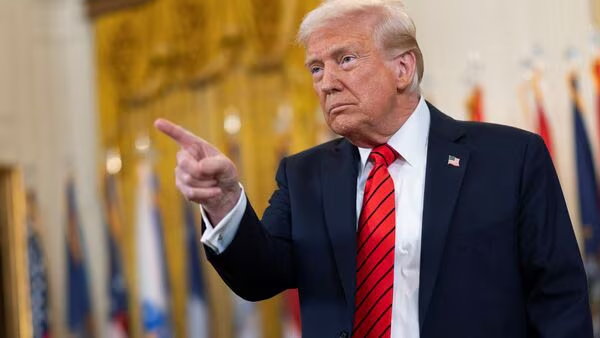
In a surprising move that has sent ripples throughout the global automotive market, former President Donald Trump announced that a 25% tariff would be imposed on imported automobiles and key auto parts, effective April 3. The announcement, made during a press briefing at a New York hotel, marks a significant departure from previous trade policies and has raised questions about the future of the U.S. auto industry and international trade relations. Trump, known for his “America First” approach, stated that the new tariff is aimed at protecting domestic manufacturers and leveling the playing field against what he described as unfair trade practices. “This tariff is about putting American workers and businesses first,” Trump declared. The policy is expected to boost domestic production and encourage foreign automakers to establish or expand manufacturing facilities within the United States. Industry experts, however, have expressed mixed reactions. Some economists warn that a 25% tariff could lead to retaliatory measures from trade partners, potentially igniting a trade war that would affect not only the auto industry but other sectors of the economy as well. “While the intent to protect local jobs is understandable, tariffs of this magnitude risk increasing costs for consumers and could slow overall economic growth,” said a senior trade analyst from a leading economic research institute. Automobile manufacturers are closely watching the developments. Representatives from both domestic and international carmakers have begun assessing the potential impact on supply chains and pricing structures. Several companies are reportedly reviewing their long-term strategies to counterbalance any negative repercussions. Analysts suggest that while some firms might benefit from increased domestic demand, others could suffer from reduced export competitiveness. The announcement has also ignited debate in Washington. Lawmakers from both parties are expected to hold hearings to assess the economic implications of the tariff and explore alternative measures that might achieve similar goals without risking international trade relations. Trade policy scholars emphasize that tariff decisions, particularly those of significant scale, require careful consideration of both immediate and long-term effects on the economy. As discussions continue, stakeholders from various sectors are bracing for a period of uncertainty. Government agencies and industry groups are set to convene in the coming weeks to map out contingency plans. The international community, meanwhile, is keeping a close eye on the United States’ next steps, with several nations already hinting at the possibility of reciprocal actions. The 25% auto tariff announcement is yet another chapter in the evolving story of U.S. trade policy. With far-reaching implications for domestic industries and international relations alike, its full impact will unfold in the coming months as all eyes remain on Washington and the global marketplace.